
01The Geography of the Myth
Every writer who has ever arrived in Paris with a manuscript and a thin wallet has done so in the shadow of predecessors. The cafés of Saint-Germain-des-Prés — the Flore, the Deux Magots, the Procope — are freighted with literary memory to the point of parody. Sartre and de Beauvoir held court at the Flore through the Occupation and after, working through mornings at marble tables because their apartments were cold. Before them, the surrealists colonised Montparnasse. Before that, the naturalists gathered at Flaubert's Sunday salons on the rue Murillo. Paris has always organised its writers into visible, competing tribes, and the cafés were where the positioning happened — arguments about form, manifestos drafted on napkins, feuds conducted in plain sight.
The Left Bank is still the engine room. The concentration of publishers along the rue de Grenelle and the boulevard Raspail — Gallimard, Le Seuil, Minuit — remains extraordinary. A manuscript reaching the right desk in the sixth arrondissement can still change a career overnight in a way that happens almost nowhere else in the world. The Prix Renaudot, the Prix Médicis, the Goncourt: these prizes are decided by juries who often lunch at the same three restaurants, and their verdicts genuinely move books into the hands of hundreds of thousands of readers. Nowhere else does literary distinction translate quite so reliably into public attention.
02The Myth That Works
The little magazines — La Nouvelle Revue Française, launched in 1909 and still a point of reference; the postwar Les Temps Modernes; the scrappier journals that surface and vanish from print runs of a few hundred — have made Paris the place where French literary taste is made, contested and remade. Provincial writers have always understood that to matter, they must eventually pass through the capital. Colette arrived from Burgundy. Proust barely left the city but made its salons into an entire cosmology.
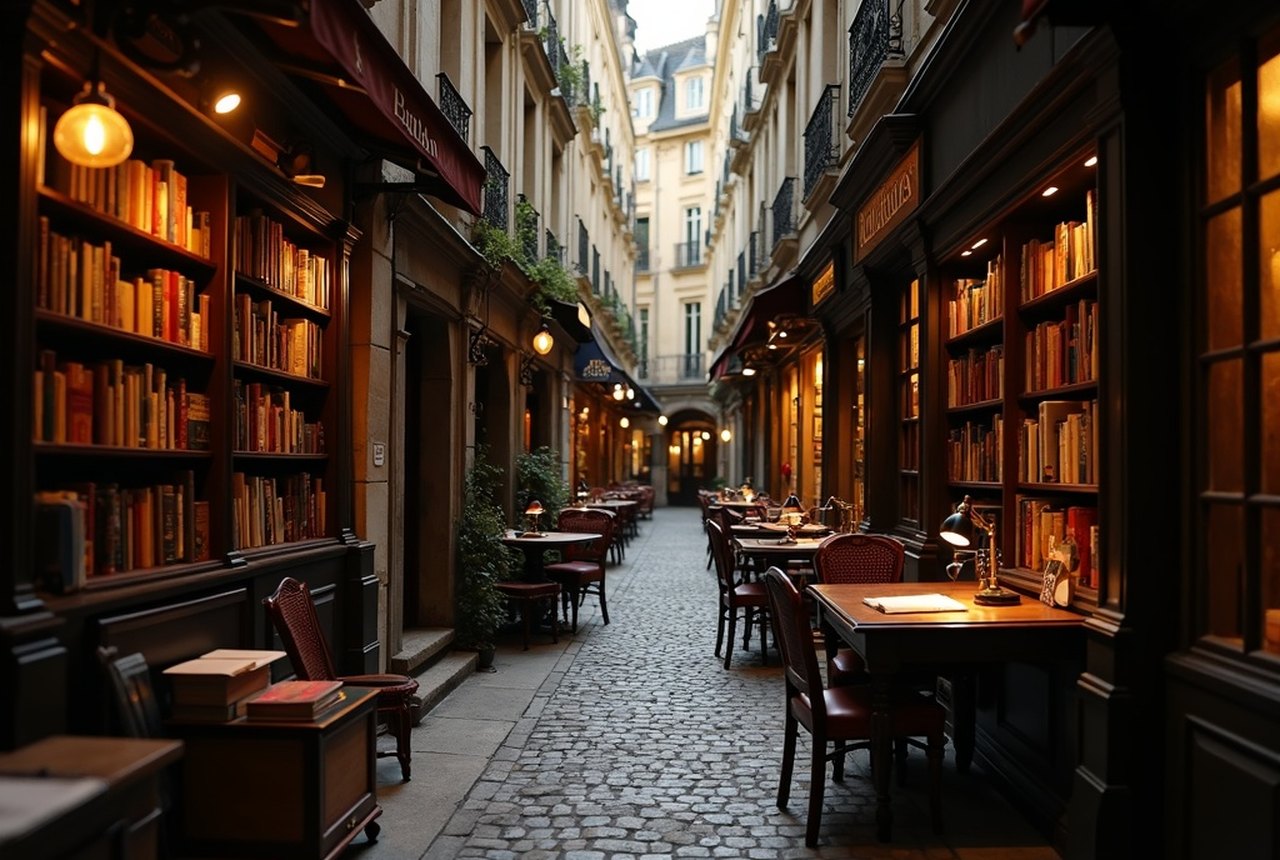
The honest version of the myth is this: Paris is demanding, expensive, hierarchical, and sometimes suffocating — but the infrastructure it offers a serious writer is real. The readers are serious, the critical culture is serious, and the conversation between literature and public life remains, improbably, alive. The city sells a beautiful story about itself, and the story, more often than not, is at least half true.
Nowhere else does literary distinction translate quite so reliably into public attention.